


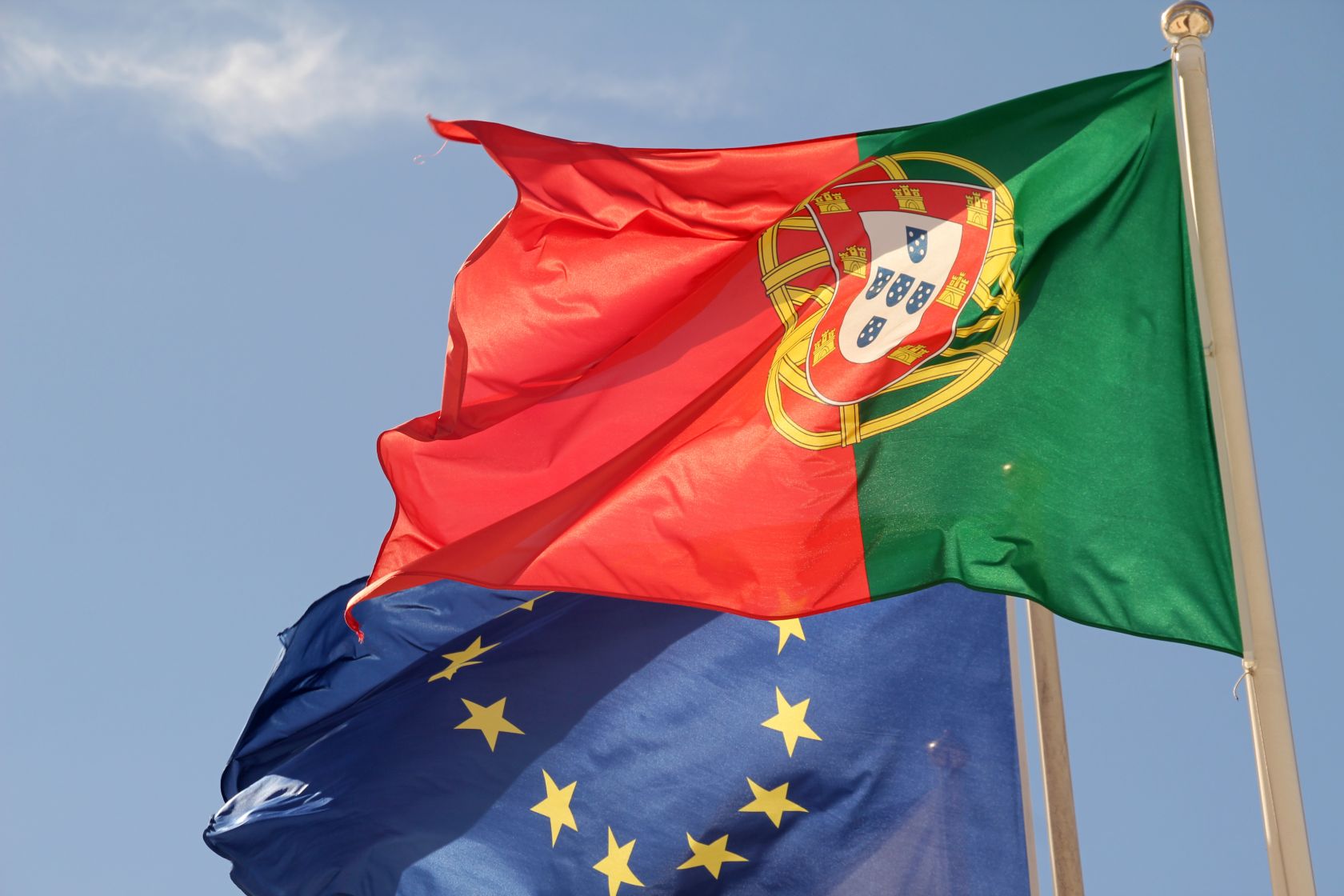
Yet to be transposed into Portuguese law, the new European directive on salary transparency promises to give access to salary information, according to Executive Digest. Companies will face new obligations, while workers get new rights.
Member states are instructed to incorporate the rules into domestic legislation starting 7 June. The objectives of the new laws are to reduce wage inequalities between genders and reinforce the principle of equal pay for equal work through transparency and monitoring mechanisms.
Equal pay through transparency
The changes will be noticeable starting from the recruitment phase, where all companies are required to disclose the salary or salary range for the applicants’ position.
Concurrently, to prevent the perpetuation of inequalities, employers are no longer allowed to question candidates about their previous salaries. Internally, companies are also obliged to disclose information on pay levels amongst employees.
According to the objectives defined by the European Union, the measure seeks to reduce discrimination and ensure that employers and candidates can negotiate based on symmetrical information.
Salary disclosure requirements
With the new measures, companies must disclose information on wage disparities between genders performing equivalent job positions, including reports and data on the proportion of genders working in different pay brackets.
To guarantee anonymity and protection of personal data, companies will not be required to disclose individual salaries but will be required to give average or median pay values.
Another measure to reinforce the principle of internal transparency is the prohibition of contractual clauses that prevent workers from discussing their salaries.
Sanctions for wage disparities
Should reports reveal salary differences equal to or greater than 5 percent for the same job position, where differences are not justified by objective criteria, the company is required to conduct internal audits.
If the company fails to correct the discrepancies within half a year, this may result in sanctions, and employees are eligible for compensation claims.
Gradual implementation
The implementation of these new rules will be done gradually, determined by the size of the company. Organisations with 250 or more employees are required to submit annual payroll information starting June 7 next year, with data relating to this year.
Organisations with between 150 and 249 employees must do so every three years, starting on the same date next year. For organisations with between 100 and 149 employees, the quarterly obligation comes into effect in 2031. Depending on future decisions, organisations with fewer than 100 employees may also be included.
Portugal has yet to present any formal legislative proposal for the directives, which puts pressure on the Government and Parliament. Several parties have put forward their own legislative initiatives, with parties such as Chega, PCP, CDS and PAN already having general approval, with discussions underway in the committee.
The CDS has amended its proposal in plenary to include an explicit reference to the European directive, emphasising the importance of aligning the national legislation with European rules.
 Add as a preferred source on Google







 Portugal Handbook
 English
 Nederlands
 Deutsch
 Français
 Español
 Italiano
 Svenska
 Pусский
 中文
中文 Türkçe
 Português
 Czech
Czech Hungarian
 Polski
 عربي
عربي Suomi
Suomi עִברִית
 Português (Brasil)
Another needless inflationary regulation that will only drive up the cost of products and reduce the competitiveness of European industry. Well done, that is, if you want to wreck an economic system. Otherwise, the state has no business intruding itself upon a private salary negotiation between employers and prospective employees. There's an Italian word for the coercive intrusion of the state in civil society - it begins with an F. Finally, the issue of sexual inequality relative to pay is a non-issue. No two individuals, male or female, possess the same talents and capacities for work so it's none of the state's business to decide pay scales. If the EU really wants to start a trend, why not make sure that footballers all get the same salaries? Because simply not all footballers possess the same talent. And the exact same scenario plays out in every other human endeavour. That is why forced "equality" of pay is a moral abomination.
By Tony from USA on 27 May 2026, 21:59
What about transparency with government officials? They have salaries that are outrageously higher than the average worker, yet nothing is ever mentioned about them! If there is going to be transparency, it should start with the government, not private businesses!
By Paula Gomes from Algarve on 28 May 2026, 10:09
When I worked in hotels, it appeared that women often had nicer transport as in fancy cars where as most men rode old mopeds or bicycles. It appeared on the surface like the gender pay gap was inverted in favour of women except at senior management level based on apparent lifestyle differences
By Luke Halpin from Algarve on 28 May 2026, 13:04
This is misleading, there is no new piece of legislation on June 7th 2026. The timeframe for the nation states pass this European Union April 2023 legislation was from June 2023 until June 2026. The EU legislation isn't new, and what will happen from June 7th 2026 onwards is that countries like Portugal, that haven't passed this legislation nationally, will be not be following the EU rules.
That is likely to happen, but it's not infrequent, Portugal will be sued by the EU Commission probably, and then it'll pass the thing in some time, probably.
By Platter from Other on 29 May 2026, 09:59
Does this concept also apply to the EU so called government? Talking abut European economy and industry, the Brussels clique has definitely seriously impacted this in the last few years, and not necessarily in a positive fashion. I wonder how nuch compensation they draw?
By JC Audet from Beiras on 29 May 2026, 11:49