


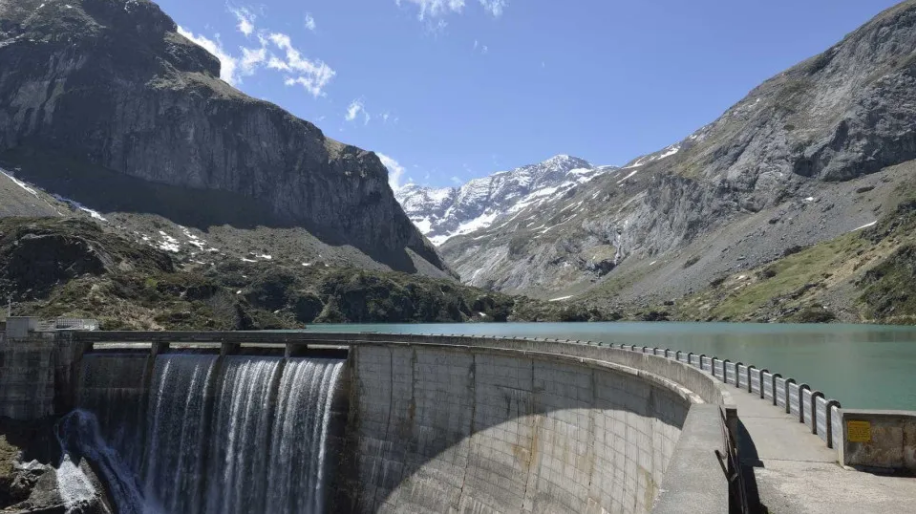
On 15 July, in Gouveia, the Minister of Environment and Energy, Maria da Graça Carvalho, argued that the Girabolhos dam, in the Central region, is an “essential and strategic” infrastructure for the country.
“It is a multifaceted facility, with many functions. The first is to guarantee the security of water supply to the population, then the production and storage of energy and, finally, flood control in the Lower Mondego,” said the minister at the launch session of the public tender for the construction of the project, which took place at the Gouveia City Hall, in the Guarda district.
Technical weaknesses
Now, Zero - Associação Sistema Terrestre Sustentável (Zero - Association for a Sustainable Terrestrial System) says it has analysed the documents of the public tender launched for the 65-year concession of the Girabolhos Multipurpose Hydraulic Project and has concluded that the procedure presents "technical, economic and legal weaknesses that seriously jeopardise the public interest and raise strong reservations about its ability to attract responsible investment."
"The State intends to grant a project with a high environmental and financial impact without demonstrating that it constitutes the best solution for the water management problems in the Mondego basin and without presenting any public study that supports its economic viability. It is a blank check for 65 years, and Zero argues that the procedure should be suspended," it explained.
This organisation added that "to all this is added an unacceptable situation in which the APA - Portuguese Environment Agency is simultaneously the awarding entity, the beneficiary of the payment, the Environmental Impact Assessment authority, the licensing entity and the appeals body - a promiscuity of roles that raises many doubts as to the fairness of this procedure."
No measures for flooding
The association also explained that the Government has presented Girabolhos as a response to the floods in the Lower Mondego, but warned that the object of the concession "continues to be a hydroelectric project whose profitability depends essentially on the production and sale of electricity."
"The tender documents do not establish specific requirements regarding flood control, nor do they define any indicators that allow for the evaluation of the infrastructure's performance in this function. On the contrary, the economic model of the project encourages the concessionaire to keep the reservoir as full as possible to maximise electricity production, precisely the situation that reduces the available capacity for flood absorption."
The Girabolhos dam, in the municipality of Seia, will be built in Alto Mondego, in an area that includes the municipalities of Fornos de Algodres, Gouveia and Seia, in the Guarda district, and Mangualde and Nelas, in the Viseu district.
Misalignment of interests
Zero also considered that there is a misalignment between the public interest and the economic incentives of the project and said that the Government never explained: "how a project that was abandoned by the previous concessionaire, after several years of development and tens of millions of euros invested, has now become economically attractive".
"Despite this lack of economic demonstration, the bidding process places practically all the risks of the project on the future concessionaire. The contractor will bear the full costs of the new Environmental Impact Assessment, complementary studies, execution project, licensing, construction and financing of the infrastructure, also assuming the risks associated with the evolution of the electricity market, hydrological changes resulting from climate change and environmental constraints that may result from the assessment process."
Weak negotiating position
Zero also mentions that there is a high risk of the bidding process being unsuccessful, and if there is only one bidder, the State may face "an extremely weak negotiating position, since the bidding process does not establish any base price or minimum financial compensation for the concession of a strategic water resource for 65 years, with the only award criterion being the value of the compensation offered."
"With only one bidder, there is a clear economic incentive to submit only the minimum bid necessary to win the bidding process, and the State may end up ceding a public asset of high strategic value for a much lower compensation than that obtained in the previous procedure," it warned.
 Add as a preferred source on Google





 Portugal Handbook
 English
 Nederlands
 Deutsch
 Français
 Español
 Italiano
 Svenska
 Pусский
 中文
中文 Türkçe
 Português
 Czech
Czech Hungarian
 Polski
 عربي
عربي Suomi
Suomi עִברִית
 Português (Brasil)
Follow us on social media