


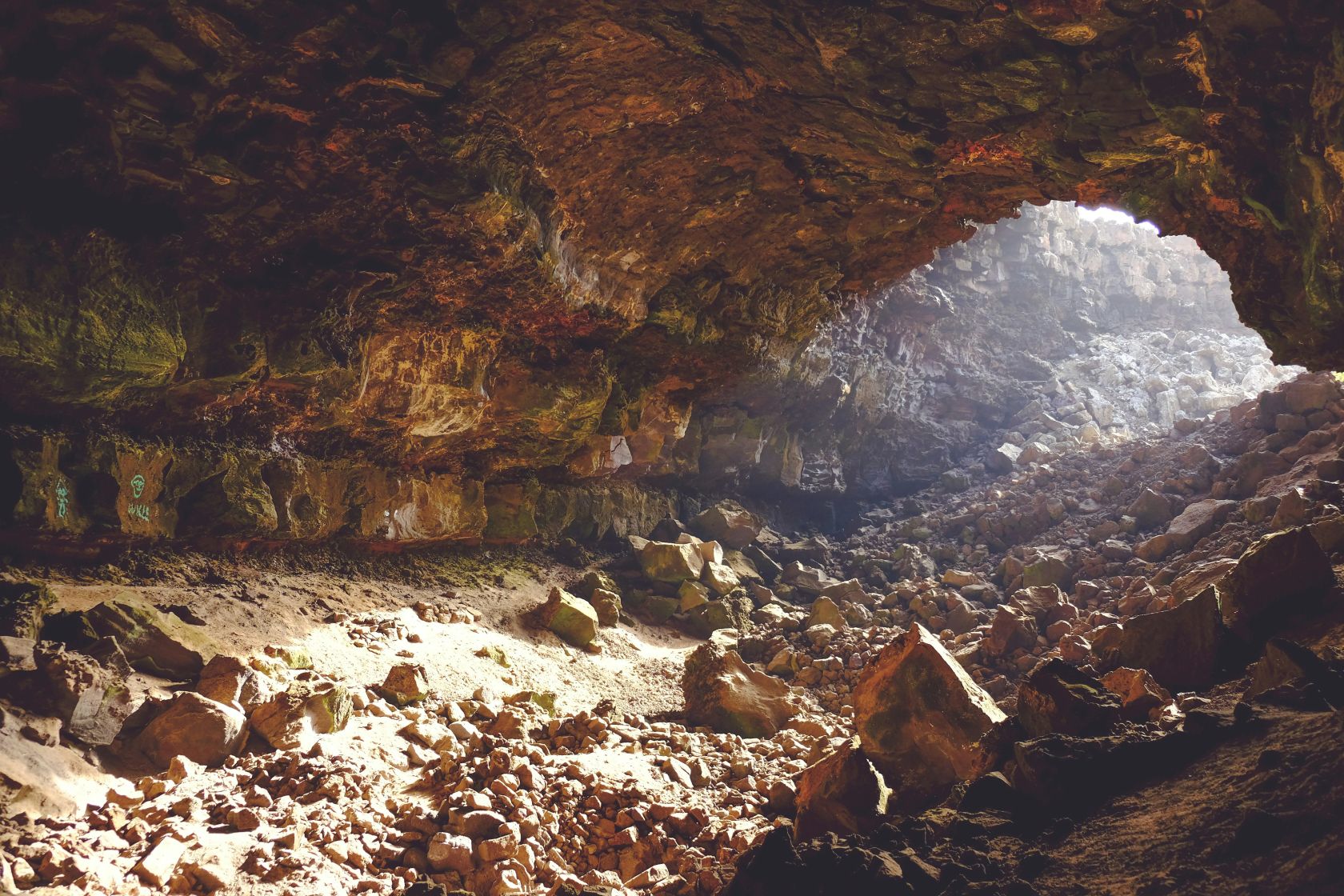
"It was a great joy and also a surprise to realise that this discovery happened precisely in the Escoural Cave," archaeologist Sara Garcês, from the Terra e Memória Institute (ITM) of Mação and the Polytechnic Institute of Tomar (IPT), in the district of Santarém, who was part of the research team, told Lusa.
The result is part of an international study published in the scientific journal Nature Communications. It demonstrated for the first time that human genetic traces can survive for thousands of years in cave walls, opening new possibilities for investigating the presence and behaviour of prehistoric communities.
The investigation involved scientists from Portugal, Spain, Italy, Germany, the United Kingdom, and China. It analysed 54 samples collected from 24 rock art panels in 11 caves on the Iberian Peninsula, including the Escoural Cave in the municipality of Montemor-o-Novo.
Authentic human DNA
Of the five samples that revealed authentic ancient human DNA, three were identified in Escoural, the only known site in Portugal with Palaeolithic art in a cave context.
With this discovery, we now know that the Escoural Cave, which may not be as well known to the general public as many caves in Spain, hides true treasures. These continue to amaze the international scientific community, the researcher added.
According to the study's authors, one of the samples collected from a pigmented calcite crust in the Alentejo cave contained human DNA, but not animal DNA. This rare circumstance suggests direct deposition through human contact with the wall.
Genetic material
Researchers admit that this genetic material may have been left through touch, the application of pigments, or the projection of bodily fluids associated with the creation of or interaction with the rock art.
For Sara Garcês, the discovery represents a paradigm shift in the way archaeological remains are interpreted.
"This is one of the most interesting parts of this discovery because we are moving from an archaeology of objects to an archaeology of gestures and their meanings," she stated.
According to the archaeologist, the results indicate that the Escoural Cave "was not merely contemplative," revealing a physical relationship between human groups and that underground space.
"These individuals left marks that went far beyond drawing: they left their own biology imprinted on the stone," she emphasised.
The study was developed within the scope of the First-Art project, coordinated by Hipólito Collado, a researcher at ITM and the Centre for Geosciences, which, in collaboration with the Max Planck Institute for Evolutionary Anthropology in Germany, extended the research on rock art to genetic analysis.
The authors believe that the discovery opens a new avenue of research in archaeology and paleogenetics, allowing the study of human presence in caves even in the absence of skeletons, artefacts, or archaeological sediments.
Analysis of DNA
The analysis of DNA preserved in the walls could help identify biological characteristics of the populations that frequented these spaces and better understand the occupation and use of the cavities over time.
The ITM team from Mação – which also included researchers Luiz Oosterbeek, Hugo Gomes, Pierluigi Rosina, and Virginia Lattao – is already working in the field to "consolidate and refine this methodological protocol in other contexts and chronologies," in Portugal and abroad.
"We want to continue leading this technological transition, demonstrating that it is possible to obtain revolutionary biological data by studying the artistic expressions of our ancestors," concluded Sara Garcês.
 Add as a preferred source on Google





 Portugal Handbook
 English
 Nederlands
 Deutsch
 Français
 Español
 Italiano
 Svenska
 Pусский
 中文
中文 Türkçe
 Português
 Czech
Czech Hungarian
 Polski
 عربي
عربي Suomi
Suomi עִברִית
 Português (Brasil)
Follow us on social media