


I overheard two lady shoppers in a supermarket talking about water - I wasn’t eavesdropping, they were just talking as I walked past the huge array of bottled water.
Now, I generally buy supermarket own brands as they’re cheap -as after all, we have four dogs and are continually topping up their bowls as well as drinking it ourselves. One of these two ladies said that she only drank water from Monchique, and I lost the reason why as I drifted past. It led me to think, are bottled waters that different? They have all passed stringent testing processes, and water is, well, just water, isn’t it?
It turns out water can be very different. I looked into Monchique water (so to speak), and it seems it is a naturally alkaline mineral water, prized for its very high pH of 9.5, which helps rebalance body acidity. I looked into what pH means, too – being a science weakling – and discovered it’s a scale of ‘potential of hydrogen’, meaning a pH of 0–6 is acidic (such as lemon juice), 7 is neutral, and 8–14 is basic/alkaline (e.g., baking soda). Maintaining the correct pH is critical for life, with human blood, for instance, needing to be within a narrow range of roughly 7.35 to 7.45 to function properly.
Natural Antioxidant
Goodness me, given its well-known therapeutic properties, it sounds like we have a ‘magical’ or ‘sacred’ source here on our own little stretch of the Iberian Peninsula! Coming from 900 meters deep in the Monchique Mountains, this water has natural antioxidant properties that provide great hydration, help balance body acidity, support bone health, and aid recovery while reducing fatigue.
There are even natural thermal springs in Monchique, specifically in the town of Caldas de Monchique. These famous springs provide highly alkaline water that has been used for its healing properties since Roman times, and visitors can still visit, bathe, or collect water from the area.
250 metres above sea level, the thermal baths here are one of the best-kept secrets of this area of pure air and tranquillity. The water here emerges from inside the earth at a comfortable natural temperature of around 32°C. Rich in bicarbonate, sodium and fluoride, it is reputed to be good for respiratory ailments and for musculoskeletal disorders. Monchique water supposedly has benefits in terms of delaying ageing and preventing osteoporosis. These baths sound like the Springs of Eternal Youth!
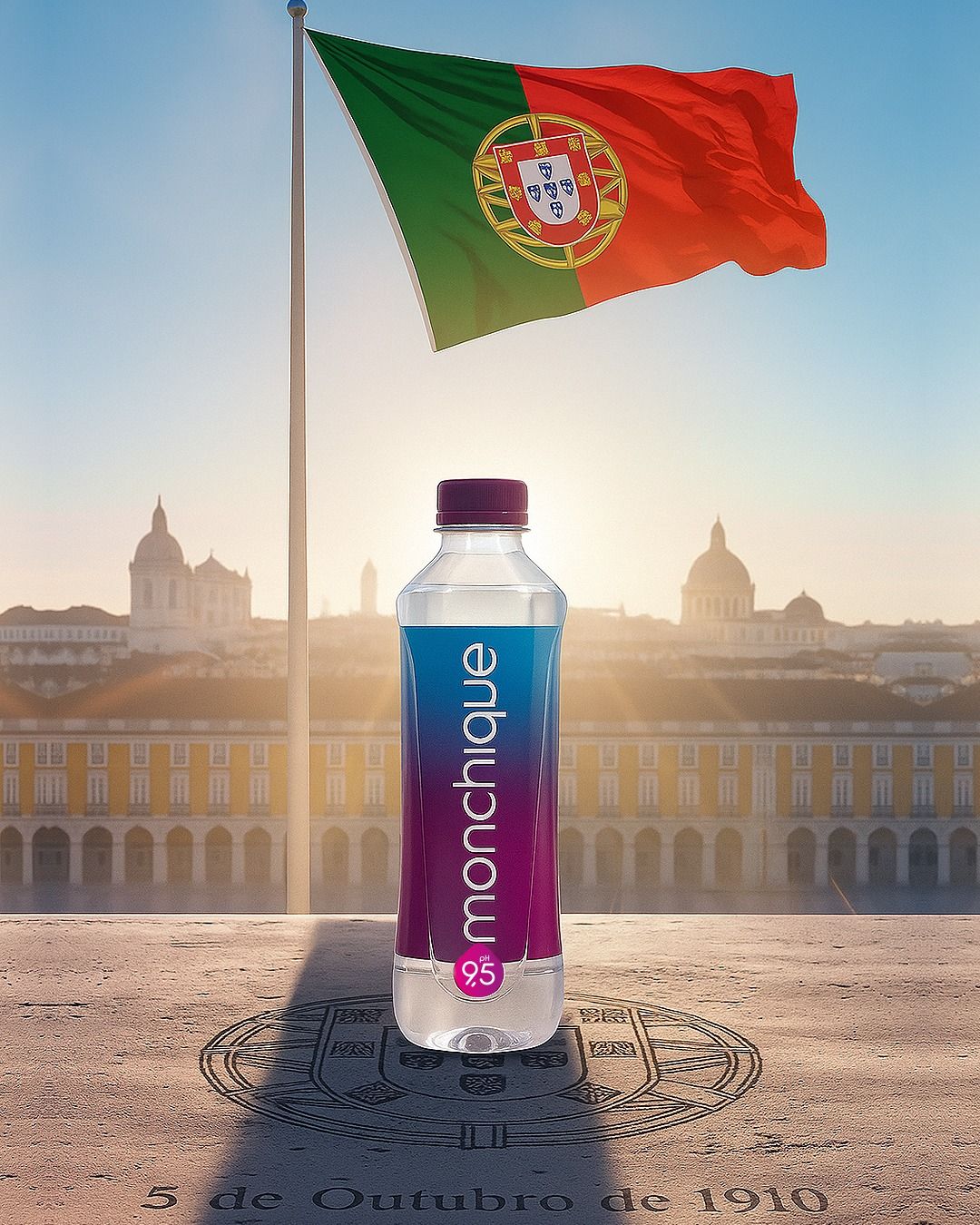
Waters from different places in Portugal
There are distinct differences between bottled waters in Portugal, which are generally categorised into natural mineral water and spring water. Popular brands differ by pH level and taste, with notable options including low-sodium or mineral-rich, with around 33 types available. I doubt that I personally could tell the difference, but Portugal has a wide variety of natural mineral-rich waters from different regions that taste distinctly different from one another due to variations in where the water was sourced or bottled.
Is Bottled water safe?
Absolutely yes. Bottled water here is very safe and of high-quality, and widely available at affordable prices. The country has strict regulations for both natural mineral and spring water that meet all EU standards, and even cheap supermarket brands are primarily from safe local sources. Bottled water is OK for babies here too, with many brands having very low mineral content suitable for infant feeding - however, many parents choose to boil it anyway for added security.
Bottled water sometimes smells or tastes like bleach due to residual chlorine used to disinfect the water, or from chemical leaching from plastic packaging. While generally safe, this can sometimes happen if the water is municipal-sourced or if the bottle has been exposed to heat or stored for too long. While storing water in a hot car is generally safe for short periods, it poses health risks over time, so drink it or discard it before it is spoiled!
 Add as a preferred source on Google







 Portugal Handbook
 English
 Nederlands
 Deutsch
 Français
 Español
 Italiano
 Svenska
 Pусский
 中文
中文 Türkçe
 Português
 Czech
Czech Hungarian
 Polski
 عربي
عربي Suomi
Suomi עִברִית
 Português (Brasil)
Follow us on social media