


Australia, for instance. That’s a place which boasts spiders the size of dinner plates, snakes with enough venom to flatten a Shire horse, jellyfish that regard swimmers as light snacks and huge prehistoric-looking crocs who seem to view canoes like floating takeaway containers. Now, there’s a niche for someone!
Then there’s Portugal’s Alentejo. The biggest danger you’ll probably encounter here is falling asleep beneath a cork oak after an exceptionally long lunch. Stretching across almost a third of Portugal, the Alentejo is a land of rolling plains, ancient cork forests, vineyards, olive groves and skies so vast they make your life problems seem delightfully insignificant. It’s a place where silence isn’t merely golden; it’s practically a public service.
Shy creatures
Naturally, whenever anyone contemplates walking through the countryside, the same question arises.
“What about snakes?” Well, yes, there are snakes here. But before we start ordering any industrial-grade wellies, let’s inject a little perspective (rather than venom).
Portugal does have a handful of venomous snake species, including the Iberian adder and Lataste’s viper. Both occur in parts of the country, although encounters in the Alentejo are decidedly uncommon. They’re shy creatures whose preferred lifestyle consists largely of avoiding humans altogether, a bit like those grumpy old expats who say that they came here to avoid “people”. If you do somehow manage to stumble across one, just like those grumpy old expats, it will almost certainly be trying to escape before you’ve located your phone to take ill-advised selfies.
So, the average Alentejo snake would rather disappear beneath a rock than engage in combat with an enthusiastic rambler.
Other reptiles are altogether more charming. You’ll find harmless ladder snakes, Montpellier snakes, colourful lizards darting between sun-baked stones and geckos conducting silent evening patrols around village walls. They’re nature’s own pest control department. I love seeing them! They’re fascinating.
Speaking of pests. Yes, there are spiders too. No, they aren’t plotting anything. They’re actually mostly tiny things, thoroughly uninterested in people, spending their days consuming mosquitoes; an occupation for which they deserve medals rather than newspapers rolled into tubes.
Scorpions also exist, although discovering one requires considerably more determination than most holidaymakers possess. Admittedly, their sting is rather unpleasant by all accounts, rather than being in any way dangerous for most healthy adults.
Ticks deserve rather more respect. If you’re wandering through long grass after winter rains, it’s worth checking your clothing afterwards. It’s not glamorous, but neither is explaining an avoidable tick bite in your nether regions to your GP.
What about wild boar? Well, imagine a pig that’s spent six months at a military boot camp, and you’re probably getting the picture. They’re immensely powerful creatures, surprisingly athletic and generally active at dawn or dusk. Thankfully, they’re also keen to avoid confrontation. Most sightings involve nothing more dramatic than a fleeting glimpse of several hairy backs vanishing into woodland with astonishing speed. It’s rather disappointing really.

Wildlife treasures
So, visitors to the Alentejo often arrive expecting “The Wild Kingdom.” What they actually get is Countryfile with much better weather.
Yet, this apparent tranquillity hides one of Europe’s richest wildlife treasures. The cork oak woodlands, known as montados, support an astonishing diversity of life. These landscapes are among the European continent’s most valuable ecosystems, providing homes for hundreds of bird species, mammals, reptiles and insects. High overhead, enormous griffon vultures ride invisible thermals with barely a wingbeat. Spanish imperial eagles patrol huge territories, while black storks nest in secluded valleys far from civilisation. It’s all astonishingly beautiful and will fill your heart with complete joy.
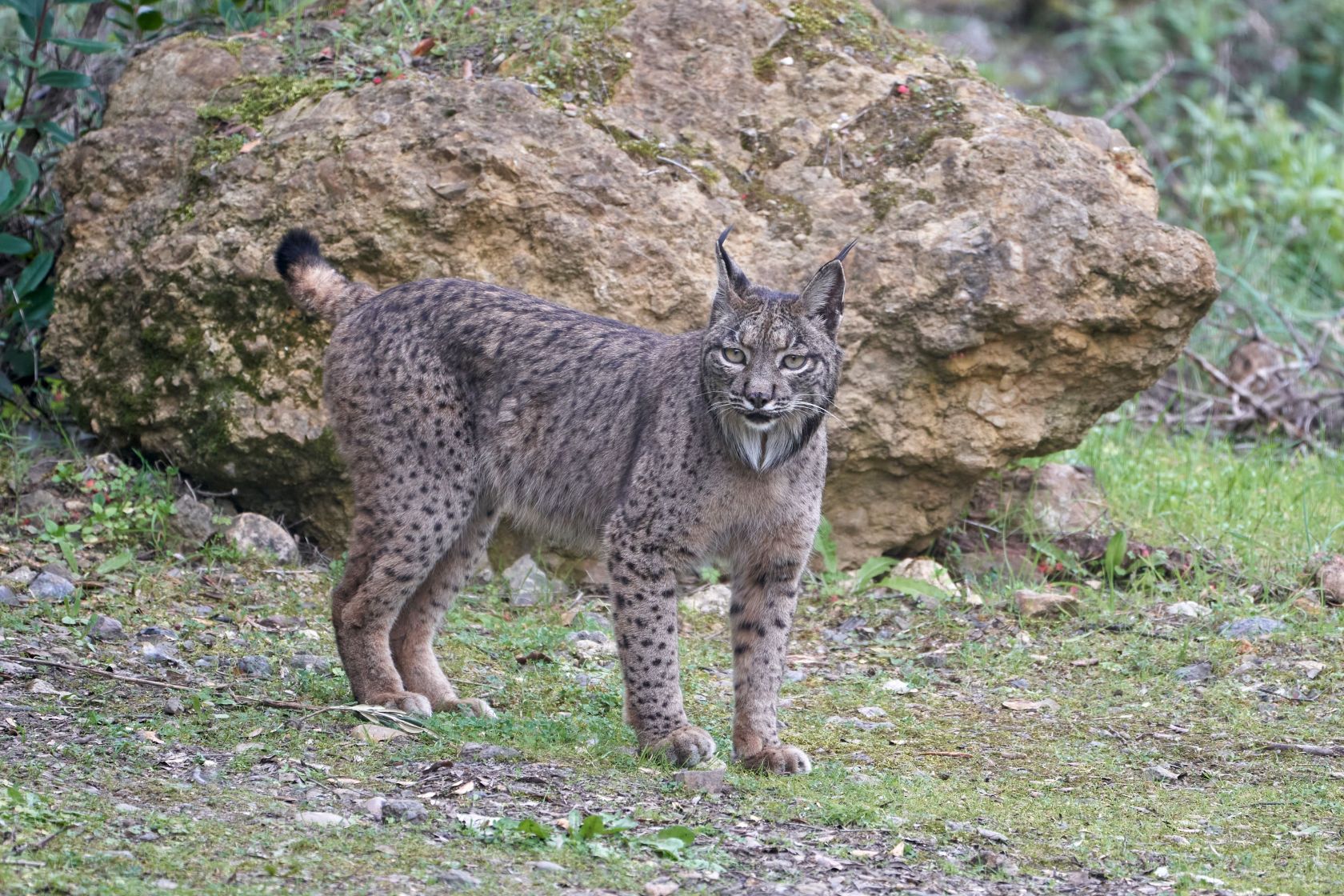
One of Europe’s greatest conservation success stories is unfolding right here in Portugal. The Iberian lynx. Not so long ago, this magnificent spotted cat stood on the brink of extinction. Fewer than a hundred individuals survived in the wild. Habitat loss, declining rabbit populations and road-kills pushed it frighteningly close to disappearing forever.
Today, thanks to decades of cooperation between Portugal and Spain, captive breeding programmes, habitat restoration and careful reintroductions mean that lynx are once again padding silently through parts of the Alentejo. You’ll almost certainly never see one.

But somehow that’s the point. Just knowing it’s there enriches the whole feel of this unique landscape. I think this is an amazing success story and just goes to show what CAN be achieved if we all just pull together.
Another conservation triumph concerns the black vulture, Europe’s largest bird of prey. Once absent from much of Portugal, dedicated habitat protection has encouraged these giant birds to return.
Ecological network
Of course, it’s not all encouraging headlines.
Climate challenges remain problematic for some species. Hotter summers, prolonged droughts and increasingly severe wildfires threaten both wildlife as well as traditional farming practices. Portugal’s famous cork oak forests also face pressure from disease, changing land use and economic uncertainties. Lose the cork forests, and we don’t simply lose corks for wine bottles, we lose an entire ecological network that has evolved over many centuries.
Sadly, road traffic continues to claim countless animals, from hedgehogs to otters, whilst intensive agriculture can reduce the diversity that makes the Alentejo so unique in the first place. Yet, there are genuine causes for optimism.
More and more landowners are embracing sustainable farming practices, protected areas continue to expand, and wildlife corridors are reconnecting fragmented habitats. Local conservation groups, scientists, volunteers and farmers increasingly recognise that preserving biodiversity isn’t an obstacle to prosperity, it’s an intrinsic part of it.
So, you see, the Alentejo demonstrates that people and nature needn’t be sworn enemies. They can simply be good neighbours. All these factors collectively are what make this region so unforgettable. Living peacefully alongside nature provides a certain magic.

Celestial light
As another glorious evening settles across the plains, golden sunlight spills over cork oaks whose twisted branches have witnessed centuries of passing seasons. Cranes drift overhead, sheep bells echo softly across distant hills and somewhere, unseen beneath fragrant rosemary and wild lavender, a shy fox begins another night’s silent adventure.
As the stars emerge one by one, until the heavens become almost impossibly saturated with celestial light, the Alentejo air gently cools, the cicadas enter centre-stage and every sound seems to echo for miles. It’s in these moments we realise that the Alentejo isn’t merely somewhere to visit, it’s somewhere to relish and embrace.
Wildlife actually asks for remarkably little. Clean rivers, ancient trees, open skies and enough space to continue stories that began long before any of us ever arrived here. If wildlife manages to thrive, then so can we all. This may look like a simplistic overview, but I don’t think it’s all that far from the truth.
So. Long may the Iberian Lynx roam unseen, long may vultures circle effortlessly above sunlit ridges, and long may Portugal’s famous cork oaks stand resiliently against yet another century of seasons. Even the snakes. Long may they also continue doing what they’ve always done best. Avoiding us-lot! Frankly, I think that all of us will be much happier if we live and let nature live alongside us. I know I will be.
 Add as a preferred source on Google







 Portugal Handbook
 English
 Nederlands
 Deutsch
 Français
 Español
 Italiano
 Svenska
 Pусский
 中文
中文 Türkçe
 Português
 Czech
Czech Hungarian
 Polski
 عربي
عربي Suomi
Suomi עִברִית
 Português (Brasil)
Follow us on social media