


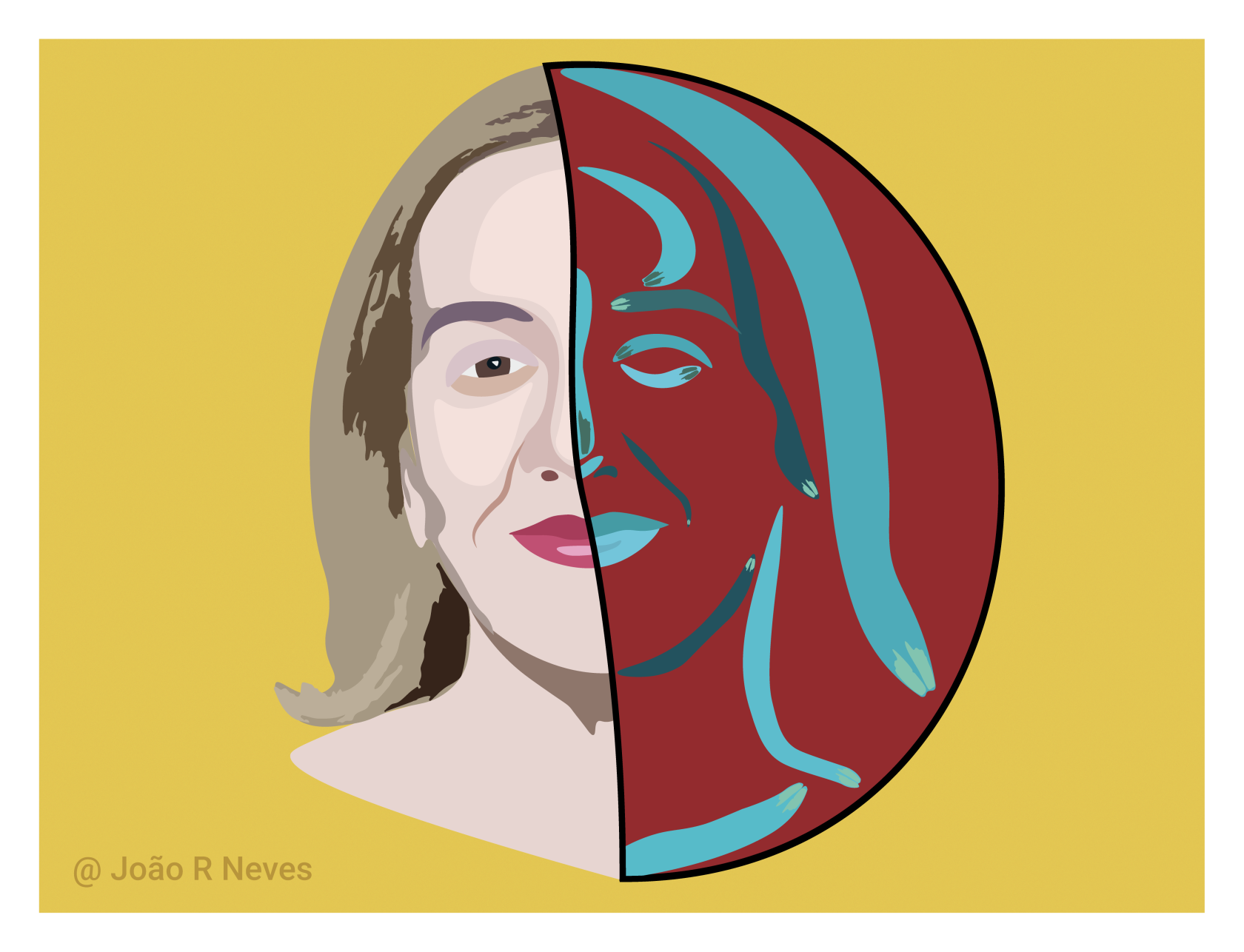
Patrícia Maciel is Associate Professor at the School of Medicine and, since February 2023, Director of the Institute for Research in Life and Health Sciences (ICVS). The institute is not a backdrop to her scientific work. It is, in its own way, a project she has been running in parallel for over two decades.
The choice that was never really a question
Growing up in Porto, the daughter of two doctors, Patrícia felt the pull of science early. “I knew I wanted to be a scientist from a very young age,” she says. “That was always it.” She liked the biological foundations of disease, the idea of understanding what goes wrong at the molecular level. The clinical side held less appeal. The family pressure to study medicine was there, she says, but “benign”. “They got used to it. I’m quite decisive, and I think they realised I was going that way.”
Her parents, both clinicians who had maintained an active interest in research throughout their careers, came to understand that well enough. Her grandfather took longer. An engineer by profession, when Patrícia told him she was pursuing a biochemistry degree, he told her: “Those philosophies won’t fill your stomach.” Then one day he clipped a newspaper article about genetics and its applications to agriculture and passed it to her with genuine interest. “He said, have you seen this thing about genetics? I said, hello, you know I work in genetics. He said, do you really?” She laughs. “I gained a lot of value with him that day.”
She enrolled in biochemistry at the University of Porto in 1988. The move toward human genetics came later and, like many of the decisions that would shape her career, partly by chance. Finishing her degree, she had two options on the table: one involved the genetics of Portuguese wine varieties, the other a recently identified hereditary neurological disorder called Machado-Joseph disease. Her mother was a neurologist. The biomedical research infrastructure in Portugal was stronger in biomedicine than in agronomy. She chose the biomedicine branch.
A worm, a conference, and a decision
Her doctorate, completed in 1998 at the Instituto de Ciências Biomédicas Abel Salazar, in Porto, focused on the molecular genetics of Machado-Joseph disease, a neurodegenerative condition caused by an abnormal expansion of a CAG repeat in a single gene. The disease is rare worldwide but disproportionately common in the Azores, where it has run through generations of families. Her group contributed to mapping the gene; the final identification was made by a Japanese team. She did not experience that as a loss. “We had started doing diagnoses with the families,” she says. “You create a bond. And then you feel almost like you owe it to them — now we have to go and solve this.”
The question of how to move from gene to possible treatment led her to an unexpected place. At a conference she barely remembers, a German colleague presented a model of Alzheimer’s disease built in Caenorhabditis elegans, a small transparent worm with exactly 302 neurons, each one mapped and named. The animal carrying the toxic protein wandered at the wrong temperature, unable to find where it had learned to feed. “I never forgot that image,” she says. “I want to work with this creature.”
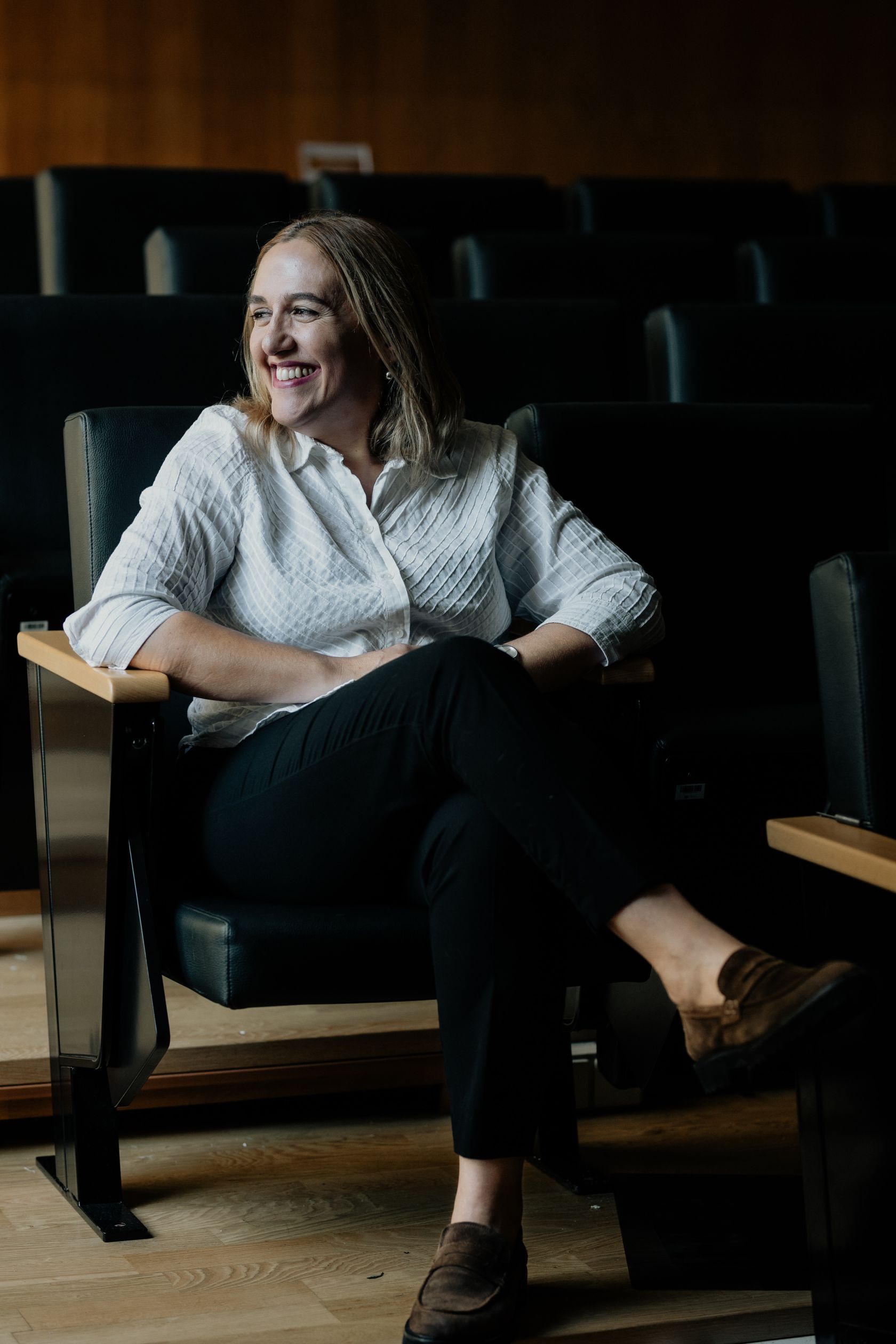
She wrote to the speaker, whom she had never met, and to colleagues in the United States working with the same model. Instructions arrived, equipment lists, and eventually one of those researchers came to spend several months in her lab in Porto helping establish the technique. “He is still our guru of C. elegans,” she says, decades later.
The worm made it possible to test hundreds of compounds quickly, without a prior hypothesis, to see what worked before committing to the slower and more expensive mouse models. That approach led her lab to discover that citalopram and escitalopram, two widely used antidepressants, reduce the aggregation of the mutant protein and slow motor decline in animals with the disease. The work resulted in a European patent. It also revealed that serotonin signalling plays a role in how the brain clears abnormal proteins, a finding with potential implications well beyond Machado-Joseph disease.
The incubator behind her research philosophy
Before moving to Braga, Patrícia had spent time at a Portuguese research institute where the culture of scientific life worked differently from what she had encountered in Canada. She needed a bacterial incubator for routine work and did what had always seemed natural: walked over to a colleague at a similar career stage and asked” Can I borrow your incubator?” What followed was a bureaucratic spiral that ended with her supervisor speaking to their supervisor, and Patrícia being told she could use the incubator only once.
This was not an isolated case, as Patricia also remembers when she was planning to buy one microscope and sent an email to the institute asking if anyone else needed one, suggesting they pool resources and buy something better together. Nobody replied. Her microscope arrived, and that same week an identical one arrived at the end of the corridor. “The suppliers were certainly happy,” she says. Two researchers, working in the same building, had bought the same equipment twice without exchanging a word.
Those experiences, shared by several of the colleagues who would go on to found ICVS, shaped everything about how they decided to build the culture of the institute. They decided not to replicate that model. From the start, all equipment at the institute belonged to everyone. “A researcher arriving today has access to everything from day one.”, Patrícia claims. Maintenance costs are shared across the institute. “It’s a policy of living in community,” she says, “and that also means rules.”
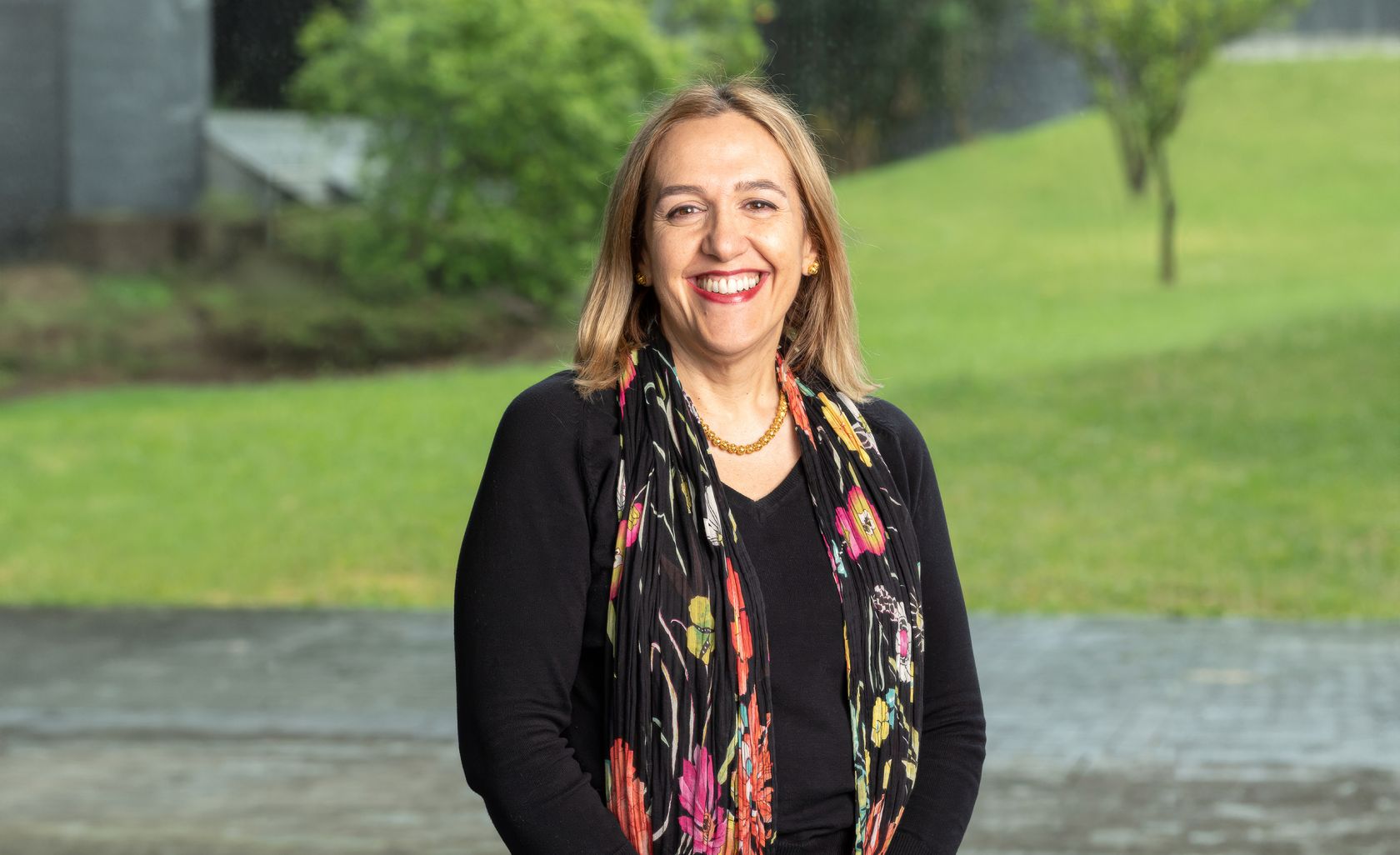
The early structure went further: no named research groups, just three broad scientific domains in which everyone worked. External evaluators struggled with it. Without named teams, they said, it was impossible to tell whether junior researchers were developing independent careers. The institute has since organised itself into larger teams but has kept the shared infrastructure and the open culture. “We started from a peripheral location, without enormous funding,” she says. “But this sharing — of physical resources and of intellectual life — made a real difference.”
Funding for resources but not people
Running the ICVS has put Patrícia Maciel in a position to see clearly what she describes as the defining structural problem of Portuguese science. Researchers now work on three- or four-year contracts. When the contract ends, the cycle resets. Expertise accumulated over years leaves with the person who built it. “I give the example to my colleagues who are doctors at the hospital,” she says. “Imagine training a specialist over four years, watching them develop real competence in a specific area, and then having to let them go and start again with someone new. In any other sector, that would be considered absurd.” In research institutes, she says, it is considered normal.
She is careful about her own position in this. “I speak from a comfortable place. I have a permanent post as a lecturer.” But she sees what precarity does to the people around her. A researcher a year and a half into a three-year contract, with a project just getting started, already knows there may be no position on the other side of it. “How do I tell someone — you are doing great work, but I have nothing to offer you in two years’ time? It is very demoralising.” The scientific output, for now, holds. But she sees the effects elsewhere: in the mental health of young researchers, in the number of master’s graduates who finish their degrees and go straight into industry instead of staying in academia. “I don’t yet see it in the quality of the science being done. But I think it’s coming.”
In the lab, and after hours
Her research group continues to work on both Machado-Joseph disease and neurodevelopmental conditions including Rett syndrome and autism. A 2024 paper in Nature Medicine, produced as part of a 55-researcher consortium across 19 countries, analysed the genomes of more than 15,000 individuals from North, Central and South America and confirmed that the genetic architecture of autism spectrum disorder is consistent across populations of different ancestries. For years, genetic studies of autism had drawn almost exclusively on samples of European origin. The findings open the door to more accurate diagnoses across a far wider range of populations.
Outside the lab, the hours are harder to come by. She dances when she can, or something adjacent to it: Zumba classes that offer, as she puts it, “a bit of music, a bit of movement.” It is a substitute for the years when she danced seriously, going in and out of dancing classes, spending hours a week on the floor. “Tango was the one exception,” she adds. “The music was so dramatic you sometimes came out in a worse state than you went in.” She is, she says, still working on getting the dancing back.
In the end, we now have a community-based institute of excellence in the north of Portugal, in part because Patrícia Maciel once failed to borrow a simple piece of lab equipment and decided, when the chance came, to build something that worked differently.
Set The Portugal News as your preferred source for news on Google
 Add as a preferred source on Google








 Portugal Handbook
 English
 Nederlands
 Deutsch
 Français
 Español
 Italiano
 Svenska
 Pусский
 中文
中文 Türkçe
 Português
 Czech
Czech Hungarian
 Polski
 عربي
عربي Suomi
Suomi עִברִית
 Português (Brasil)
Follow us on social media